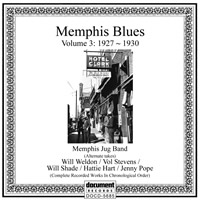
Memphis, the ‘Home of the Blues’, may not be where the music started but it was there that it was nurtured to a pitch of perfection. It also fed into other musical genres from jazz to rockabilly. When early in 1927 the Victor record company decided to send a field recording unit into the South to record blues, gospel and white country music, it struck gold in Memphis with the city’s pre-eminent jug band, led by Will Shade, also known as ‘Son Brimmer’. Highly respected A & R man Ralph Peer had visited Memphis some months earlier and had auditioned and been impressed by the Memphis Jug Band. His confidence was rewarded with very good sales of their first two records. Several takes were made of each title and some alternative takes appeared on record.
Will Weldon’s very acceptable first solo outing on record utilized common stock verses. At this time he was partnering Memphis Minnie before she switched her affections to Joe McCoy. Weldon later transformed himself into Casey Bill, appearing on many recordings as “The Hawaiian Guitar Wizard”. Based in Chicago, he became Vocalion’s answer to Decca’s big selling, slide guitarist, Kokomo Arnold.
Vol Stevens too relied on traditional lyrics for his only record, accompanying himself on his distinctive banjo-mandolin.
Will Shade’s record is an altogether different proposition. ”Better Leave That Stuff Alone” contains a stark warning to the Memphis women who indulge in drinking dangerous canned heat (“it’s just like morphine, it crawls all in your bones”) preferring to spending money on it rather than buying food. “Ice Pick” is similarly excellent with more fine piano from Jab Jones.
Hattie Hart pleads “Won’t You Be Kind To Me” and it’s an irresistible invitation with Milton Roby playing alley fiddle and (almost certainly) Jab Jones on piano on this and “Papa”.
Kaiser’s Clifton’s high voice is not unpleasant and his songs are refreshingly different. Although recorded in Memphis, he was almost certainly from further south, as “Fort Worth and Denver Blues” (which includes a mention of the Sunshine Special that Blind Lemon Jefferson sang about) and references to his home in Texas in “Cash Money” suggest. Will Shade is again in support on guitar, with jug and piano.